



Whether you manufacture kitchen cabinets, wardrobes, office furniture, or custom interior panels, edge quality directly affects the appearance, durability, and customer satisfaction of the final product. One of the most common complaints from furniture manufacturers is that edge banding begins to peel, crack, or separate from the board after production or during transportation.
Peeling edges not only reduce product quality but also increase warranty claims, rework costs, and production downtime. Choosing the right PVC Edge Banding, ABS Edge Banding, or PP Edge Banding and using the correct processing method can effectively eliminate these problems.
As a professional Edge Banding Manufacturer, Sinowolf has specialized in decorative edge banding materials since 2007. With advanced production facilities and strict quality control, we provide reliable edge banding solutions for furniture manufacturers worldwide.
Learn more about our products here:https://www.sinowolfdekor.com/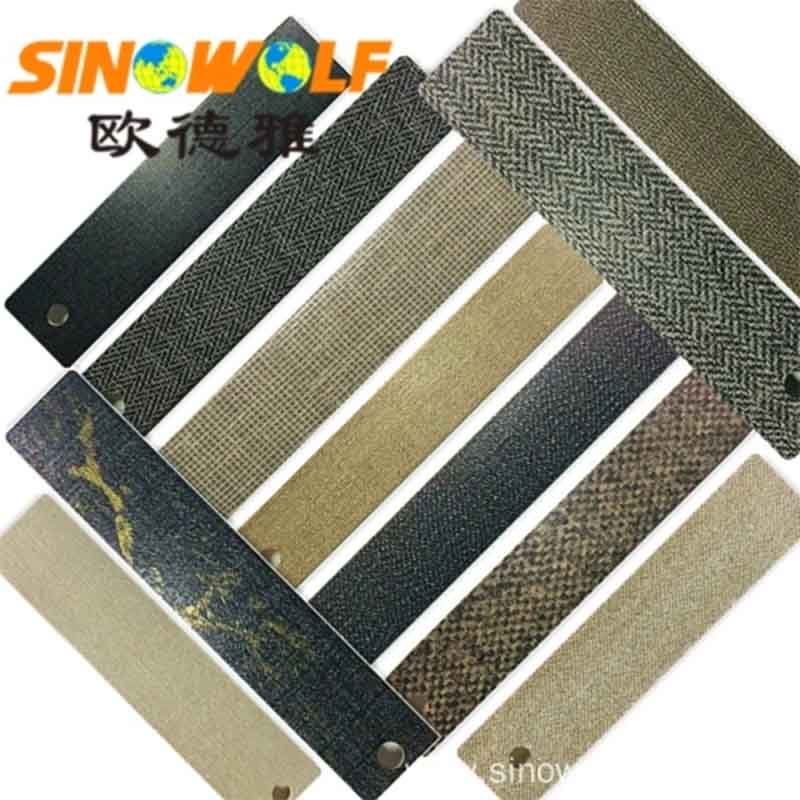
Why Is Edge Banding Peeling Off?
Edge banding failure rarely results from a single factor. In most cases, several production variables work together to reduce bonding strength. Understanding these causes helps manufacturers improve both production efficiency and product quality.
1. Poor Adhesive Compatibility
Different edge banding materials require different adhesive systems. Using the wrong glue or low-quality adhesive often results in weak bonding, especially after exposure to heat or humidity.
Modern furniture factories commonly use:
EVA Hot Melt Adhesive
PUR Hot Melt Adhesive
Laser Edge Banding Technology
A high-quality Furniture Edge Banding product should be compatible with multiple bonding technologies while maintaining consistent adhesion performance.
2. Low-Quality Edge Banding Materials
Not all edge banding tapes are manufactured using premium raw materials. Inferior PVC or recycled materials often become brittle over time, leading to edge lifting and cracking.
Professional manufacturers typically choose high-grade raw materials to achieve:
Excellent flexibility
High impact resistance
Stable dimensions
Long-term color consistency
Superior bonding performance
Whether selecting PVC Edge Banding, ABS Edge Banding, or PP Edge Banding, material quality is one of the most important factors affecting service life.
3. Incorrect Edge Banding Machine Settings
Even premium materials cannot perform properly if machine parameters are incorrect.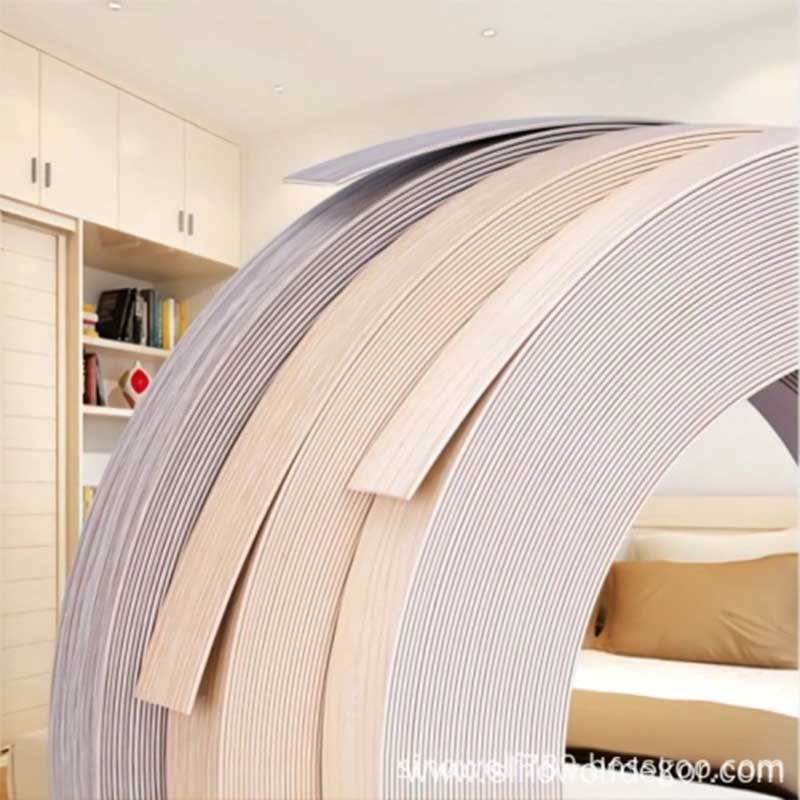
Common equipment issues include:
Insufficient pressing pressure
Improper glue temperature
Low feeding speed
Uneven roller pressure
Poor trimming accuracy
Regular calibration of edge banding machines significantly improves bonding quality and production consistency.
4. Moisture Inside the Board
MDF, particle board, and plywood absorb moisture from the surrounding environment. If moisture content is too high, adhesive performance decreases dramatically.
Before production, manufacturers should:
Store panels indoors
Maintain stable workshop humidity
Avoid processing damp boards
Allow materials to acclimate before production
Proper material storage often reduces edge failure without increasing production costs.
5. Temperature Changes During Transportation
Furniture exported internationally may experience temperatures ranging from below freezing to over 60°C inside shipping containers.
Low-quality edge banding materials often become brittle during cold weather and soften under extreme heat, causing edge separation after delivery.
Premium Cabinet Edge Banding products are designed to withstand these environmental changes while maintaining stable adhesion and flexibility.
6. Poor Surface Preparation
Dust, oil, wood fibers, or machining residue remaining on the board surface can significantly reduce adhesive strength.
Before applying edge banding, manufacturers should ensure:
Clean cutting surfaces
Accurate panel dimensions
Smooth machining quality
No contamination before gluing
This simple production step often prevents many bonding failures.
7. Choosing the Wrong Material for the Application
Different furniture projects require different edge banding materials.
For example:
PVC offers excellent cost-performance for mass furniture production.
ABS provides superior environmental performance and impact resistance.
PP is ideal for premium eco-friendly furniture projects.
PMMA delivers a high-gloss decorative finish for luxury interiors.
Selecting the appropriate material according to the application greatly improves product durability and customer satisfaction.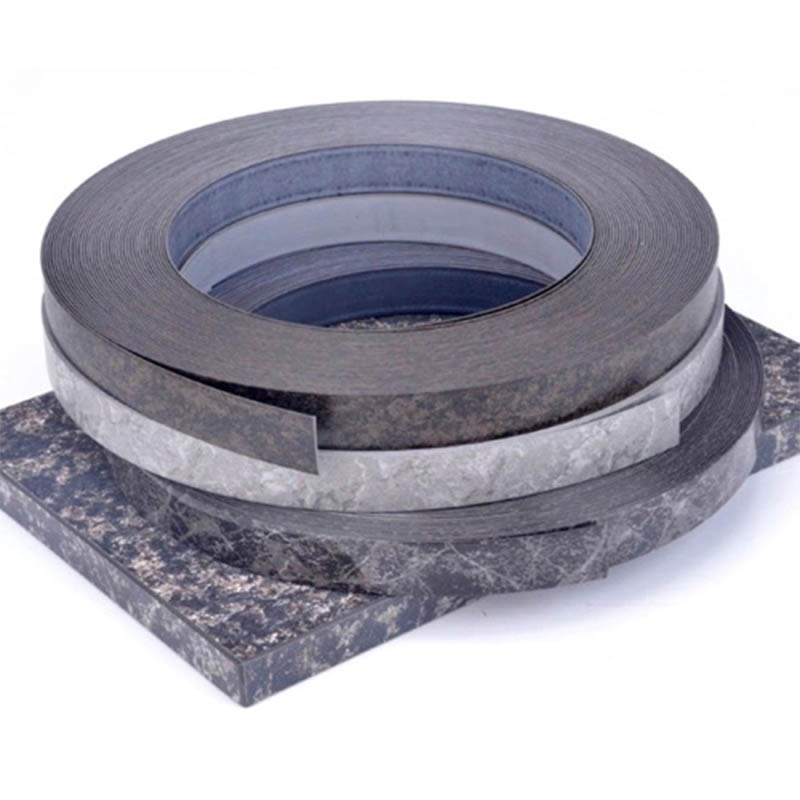
How Sinowolf Solves These Problems
With over 18 years of manufacturing experience, Sinowolf supplies edge banding materials that are designed to meet the demanding requirements of modern furniture production.
Stable raw material sourcing
Precise color matching
High bonding strength
Excellent flexibility
Scratch-resistant surface finishes
UV-resistant decorative layers
Consistent production quality
Fast delivery for global customers
Our products are widely used in:
Kitchen cabinets
Office furniture
Wardrobes
Bathroom cabinets
Hotel furniture
Retail display fixtures
Commercial interiors
Custom furniture manufacturing
Explore more edge banding solutions and decorative finishes by visiting our official website:Sinowolf Decorative Materials.
For additional industry guidance on furniture manufacturing and sustainable materials, you may also refer to:
Best Practices to Prevent Edge Banding Failure
Preventing peeling edge banding requires attention to every stage of production—from material selection and adhesive compatibility to machine setup and storage conditions. Working with a reliable supplier who provides consistent quality, technical support, and customized color matching can significantly reduce production defects and improve customer satisfaction.
In the next section, we'll compare PVC, ABS, PP, and PMMA edge banding materials in detail, explain how to choose the right solution for different furniture applications, answer frequently asked questions, and share expert recommendations for maximizing long-term furniture performance.
PVC vs. ABS vs. PP vs. PMMA: Which Edge Banding Material Is Right for Your Project?
Selecting the right edge banding material is just as important as choosing the right decorative panel. Different furniture applications require different levels of durability, flexibility, environmental performance, and appearance. Understanding the characteristics of each material helps manufacturers improve product quality while controlling production costs.
| Material | Main Advantages | Recommended Applications |
|---|---|---|
| PVC Edge Banding | Cost-effective, flexible, excellent color options, easy processing | Kitchen cabinets, wardrobes, office furniture, commercial furniture |
| ABS Edge Banding | Halogen-free, environmentally friendly, high impact resistance | Premium furniture, European export projects |
| PP Edge Banding | Recyclable, low emissions, outstanding environmental performance | Green furniture, healthcare, education, children's furniture |
| PMMA Edge Banding | Crystal-clear appearance, high gloss, UV resistance | Luxury furniture, display cabinets, decorative interiors |
Rather than choosing the most expensive material, manufacturers should select the solution that best matches the furniture application, production process, and target market.
How to Choose High-Quality Edge Banding
When comparing suppliers, many buyers focus only on price. However, experienced furniture manufacturers know that long-term consistency is far more valuable than a slightly lower purchase cost.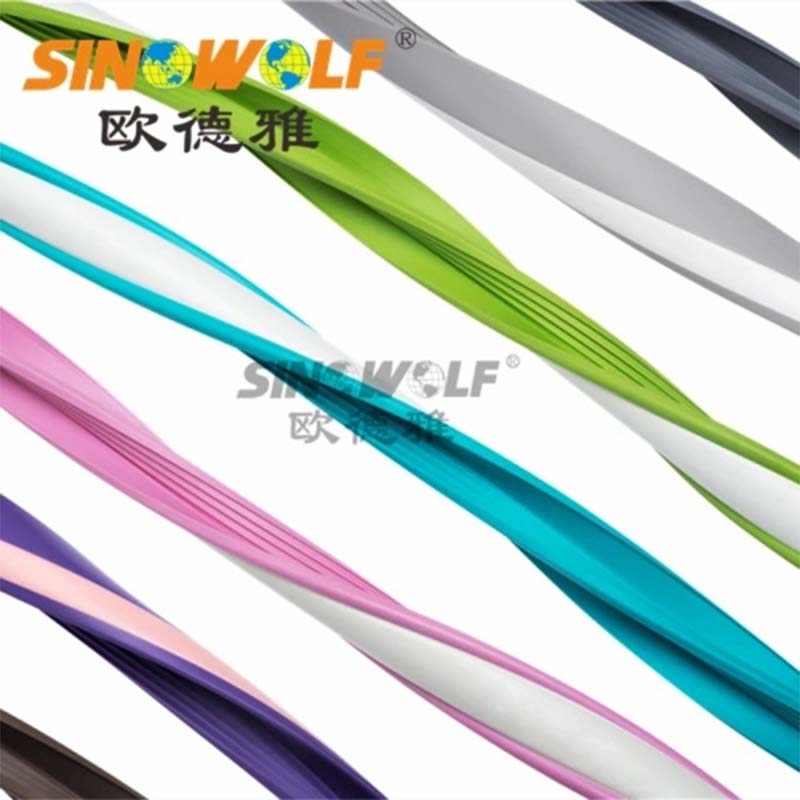
Before placing an order, consider the following factors:
Whether the supplier uses virgin raw materials instead of recycled materials.
Whether colors can accurately match major decorative board brands.
Whether the products support EVA, PUR, and laser edge banding technologies.
Whether thickness and width tolerances remain consistent across different production batches.
Whether the supplier can provide customized colors, embossing, and surface finishes.
Whether international certifications meet your export market requirements.
Whether production capacity can support long-term supply.
Choosing a professional manufacturer means fewer production problems, lower rejection rates, and better customer satisfaction.
Why Furniture Manufacturers Choose Sinowolf
Since 2007, Sinowolf has been dedicated to the research, development, production, and sales of decorative edge banding materials. Today, the company operates multiple modern manufacturing facilities capable of producing approximately one billion meters of edge banding every year.
Customers choose Sinowolf because we offer more than just products—we provide complete edge banding solutions.
More than 18 years of manufacturing experience
Annual production capacity of 1 billion meters
PVC, ABS, PP and PMMA edge banding solutions
Professional color matching service
Wood grain, solid colors, super matte and high gloss finishes
Support for customized sizes and OEM production
Stable quality with strict quality inspection
Fast delivery for global furniture manufacturers
Whether you manufacture kitchen cabinets, wardrobes, office furniture, retail displays, or customized interior furniture, Sinowolf provides reliable decorative edge solutions designed for modern production lines.
Discover more product categories and customization services by visiting our Product Center:
https://www.sinowolfdekor.com/products/
You can also learn more about our manufacturing capabilities on our About Us page:
https://www.sinowolfdekor.com/about-us/
Frequently Asked Questions
1. Why does edge banding peel off after several months?
The most common reasons include poor adhesive compatibility, incorrect machine settings, excessive board moisture, or low-quality edge banding materials. Using premium materials together with proper processing parameters greatly improves bonding performance.
2. Which material is better, PVC or ABS?
PVC offers excellent value and is suitable for most furniture applications. ABS is more environmentally friendly, has higher impact resistance, and is widely used for premium furniture exported to Europe.
3. Is PP edge banding worth choosing?
Yes. PP edge banding provides outstanding environmental performance and recyclability. It is increasingly popular in sustainable furniture manufacturing and public projects requiring eco-friendly materials.
4. Can edge banding colors match decorative panels?
Professional manufacturers offer precise color matching services compatible with many decorative board brands, helping furniture products achieve a seamless appearance.
5. Does laser edge banding require special materials?
Yes. Laser edge banding requires specially designed functional layers that work with laser edge banding equipment instead of traditional hot melt adhesives.
6. How can I reduce production defects?
Use high-quality edge banding materials, maintain stable workshop conditions, regularly calibrate equipment, and work with experienced suppliers capable of providing consistent production quality.
Conclusion
Edge banding may appear to be a small component of furniture manufacturing, but it has a significant impact on product durability, appearance, and customer satisfaction. Investing in high-quality decorative materials not only reduces production defects but also enhances your brand reputation and lowers long-term manufacturing costs.
Whether you are looking for PVC edge banding, ABS edge banding, PP edge banding, or customized decorative solutions, Sinowolf is committed to helping furniture manufacturers around the world improve production efficiency and deliver exceptional furniture products.
Contact our team today to discuss your project requirements or request free samples for evaluation.